Research Article
Aim & Scope
Dicle University Journal of Engineering, which includes experimental and theoretical works in the field of basic engineering, gives priority to publishing articles related to popular topics of engineering and aims to focus on multidisciplinary methods and technologies.
Dicle University Journal of Engineering is a multidisciplinary magazine and contains fundamental engineering issues. The target of the journal is to deliver the most popular developments in science and technology to researchers, engineers, and other curious communities.
Dicle University Journal of Engineering (DUJE) is a peer-reviewed, Open Access journal that publishes original research articles as well as review articles in several areas of engineering. The subject areas covered by the journal are:
Electrical and Electronics Engineering
Computer & Software Engineering
Biomedical Engineering
Mechanical Engineering
Mineral Processing and Mining Engineering
Civil Engineering
Author Guidelines
DUJE has general rules about the formatting of articles upon initial submission. When writing your paper, you will probably need to format your journal article ready for submission. To make this easier, Word templates are available for the journal, ready for you to download and apply to your research paper format.
Template file for Turkish version (*.docx)
Template file for English version (*.docx) (recommended)
Only when your paper is at the revision stage, will you be requested to put your paper in to a 'correct format' for acceptance and provide the items required for the publication of your article.
Blinding
It is extremely important that you do not include any identifying information about the authors in your document, as the article you submit will be sent to reviewers. Please review the body of the text for potential identifying information and ensure that all self-citations are indicated as Author (Year) for both in-text citations and references.
Article Structure
Introduction
State the objectives of the work and provide an adequate background, avoiding a detailed literature survey or a summary of the results.
Material and methods
Provide sufficient details to allow the work to be reproduced by an independent researcher. Methods that are already published should be summarized and indicated by a reference. If quoting directly from a previously published method, use quotation marks and also cite the source. Any modifications to existing methods should also be described.
Results
Results should be clear and concise.
Discussion
This should explore the significance of the results of the work, not repeat them. A combined Results and Discussion section is often appropriate. Avoid extensive citations and discussion of published literature.
Conclusions
The main conclusions of the study may be presented in a short Conclusions section, which may stand alone or form a subsection of a Discussion or Results and Discussion section.
Acknowledgments
In this section, you can acknowledge any support given which is not covered by the author's contribution or funding sections. This may include administrative and technical support, or donations in kind (e.g., materials used for experiments).
Reference
It is recommended to prepare the references with IEEE citation style. The details of the format are given in the template file.
Obligation for ORCID
Authors submitted articles to our journal should add their ORCID numbers. ORCID is short for Open Researcher and Contributor ID. ORCID is a 16-digit numbered URI that complies with the ISO Standard (ISO 27729), also known as the International Standard Name Identifier (ISNI). You can create a free registration for individual ORCID at http://orcid.org.
Copyright
Authors of accepted manuscripts should agree to transfer the copyright for the article to the DUJE and submit their final versions in electronic form adhering to the style of the DUJE.
Journal Plagiarism Policy
Dicle University Journal of Engineering has the policy to evaluate articles/reviews in terms of plagiarism. Before submitting manuscripts to our journal, it is suggested to check the similarity status/ratio in your manuscript with appropriate plagiarism software programs (iThenticate, Turnitin, etc.). In this respect, the articles/reviews submitted to our journal are subject to preliminary evaluation; manuscripts with a similarity ratio below 30%, which is determined with the Turnitin software, will be considered acceptable by our Editorial Board. Articles/reviews with more than the specified ratio (30%) are returned to the author(s).
Required files during submission:
1) Plagiarism Form ( Articles will be considered with IThenticate, Turnitin, etc. reports
2) Reviewer Suggestion Form
3) Transfer of Copyright Agreement Form
Required files during revision
1) Response to Reviewers Form
2) Highlighted version to indicate revisions
3) Clean version
Required files after acceptance
1) Ready to be published version (affiliations of authors need to be added)
Ethical Principles and Publication Policy
The manuscript should contain a statement that the work has been approved by the appropriate ethical committees related to the institution(s) in which it was performed and that subjects gave informed consent to the work. The research requiring the permission of the Ethics Committee are as follows:
-All kinds of research conducted with qualitative or quantitative approaches that require data collection from participants using survey, interview, focus group work, observation, experiment, interview techniques
-Use of humans and animals (including material/data) for experimental or other scientific purposes
-Clinical research on humans
-Research on animals
-Retrospective studies in accordance with the law of protection of personal data
-Getting permission and specifying the owners for the use of scale, questionnaire, and photographs belonging to others
-Stating that the copyright regulations are complied with for the ideas and works of art used
Price Policy
According to the decision of the Editorial Board dated 22 June 2021, the amount of the requested fee is revised.
" 200TL" fee is requested for each article submission. This fee is used for the Journal's professional typesetting.
Those who will apply for associate professorship according to the UAK criteria can communicate with us.
Tel: +90-412 241 10 00 (3637)
E-mail: muhendislikdergisi@dicle.edu.tr / mesut.seker@dicle.edu.tr
Indexes
Citation Indexes


Other Indexes


Journal Boards
Editor in Chief
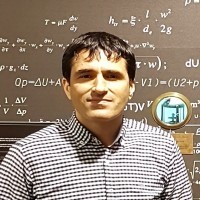
Executive Editors

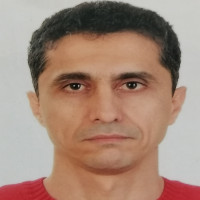
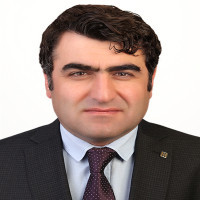
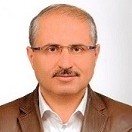
Visiting Professor at Oxford University, Dr. Idris Bedirhanoglu, who holds Bachelor and MSc degrees in Civil Engineering, got his Ph.D. from Istanbul Technical University with a co-advisor from Purdue University where he did a part of his PhD. He has been a Professor of Structural Engineering at Dicle University since March 2023. He worked as a Research Scientist at the Engineering Faculty of New York University Abu Dhabi in 2018-2019. He is the author/co-author of more than 40 journals (SCI or SCIE) or international conference papers and a co-author of four book chapters. He is on the Editorial Board of M. of J. of World Architecture and Engineering News (2014-2016), and a reviewer of more than 20 journals (SCI or SCIE). He is skilled in structural analysis, particularly in evaluating existing structures and retrofitting. As well, he has provided consultancy to more than 100 industrial projects. He has served as a member of the Technical Delegation to Evaluate Objections to Risky Building Detections (Ministry of Environment and Urbanization, General Directorates for Environment and Urbanization), vice chair of the Civil Engineering Department at Dicle University (2018-2019) and chair of the structural engineering laboratory (2010-2018). His main research interests include seismic design and evaluation of RC and historical structures, retrofitting buildings with FRP composites or textile fibers, recycling concrete, nondestructive testing, fuzzy logic, and finite element analysis.
Associate Editors
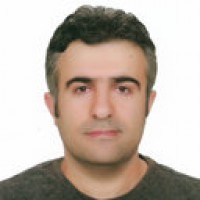
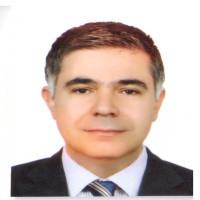
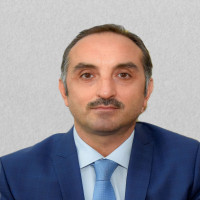
Abdulkadir Albayrak is post-doctoral research fellow at Computational Pathology and AI, Mayo Clinic, Rochester, MN. He received his BS, MS and PhD degrees all in Computer Engineering. He worked as a research assistant at the Department of Computer Engineering at Yildiz Technical University, Istanbul, Turkey between 2011-2019. He is curently Assoc. Prof. Dr. at the Department of Computer Engineering at Dicle University. He mainly works on computer vision, pattern recognition, machine learning and generative AI.


Technical Editor
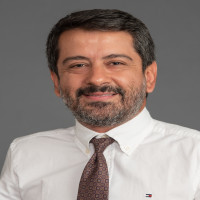

He received his M.Sc. degree in Electrical and Electronics Engineering from Dicle University in 2017 and his Ph.D. degree in 2023. In 2025, he completed his postdoctoral research at the Center for Artificial Intelligence Research, Wake Forest University School of Medicine. He is currently serving as an Assistant Professor in the Department of Electrical and Electronics Engineering at Dicle University. His research interests include medical image processing, deep learning, machine learning, medical informatics, and digital pathology.
